Forex Broker Licensing Requirements
Navigating the forex market demands an understanding of broker licensing requirements, a critical step often overlooked. This guide demystifies global regulatory frameworks, distinguishing robust oversight from superficial licenses to help traders identify truly secure environments and avoid common market illusions.
Introduction: Why Forex Broker Licensing is Non-Negotiable
The allure of the forex market is undeniable, promising accessibility and opportunity for traders worldwide. Yet, beneath the surface of sophisticated platforms and attractive leverage offers lies a fundamental truth: the security of a trader's capital and the integrity of their trading experience hinge almost entirely on the regulatory framework governing their chosen forex broker.
The Imperative of Regulation: Protecting Traders and Market Integrity
Forex regulation exists for a singular, critical purpose: to protect traders and maintain the integrity of the financial markets. Without stringent oversight, the forex landscape would be a fertile ground for fraud, malpractice, and outright theft. Regulated brokers are held to specific standards concerning capital adequacy, operational transparency, and ethical conduct. Regulatory bodies also establish clear dispute resolution mechanisms, offering traders recourse in cases of unfair treatment or technical discrepancies. The absence of such regulatory safeguards exposes traders to exorbitant risks, transforming what should be a calculated endeavor into a speculative gamble against an unregulated entity.
Key Global Regulatory Bodies and Their Jurisdictional Scope
Some of the most prominent Tier-1 regulatory bodies, recognized for their stringent standards and comprehensive oversight, include: The Financial Conduct Authority (FCA) in the United Kingdom, The Australian Securities and Investments Commission (ASIC) in Australia, The Cyprus Securities and Exchange Commission (CySEC) within the European Union, The National Futures Association (NFA) and Commodity Futures Trading Commission (CFTC) in the United States, The Swiss Financial Market Supervisory Authority (FINMA) in Switzerland, and The Federal Financial Supervisory Authority (BaFin) in Germany. Each of these bodies operates within specific jurisdictional scopes, enforcing robust rules related to capital requirements, client fund segregation, reporting obligations, and consumer protection. Their authority ensures that brokers operating under their licenses adhere to the highest standards, offering a greater degree of security and transparency to traders under their purview. Understanding which regulator oversees a broker is the first step in assessing its reliability and commitment to fair trading practices.
Understanding Regulatory Tiers: From Tier-1 Oversight to Offshore Licenses
Tier-1 regulators, such as the FCA, ASIC, and FINMA, represent the gold standard. They enforce rigorous capital requirements, mandate strict segregation of client funds, require comprehensive external audits, and offer robust investor compensation schemes. Examples include the Financial Sector Conduct Authority (FSCA) in South Africa or the Financial Services Commission (FSC) in Mauritius. At the lowest tier are offshore licenses, often issued by jurisdictions like Vanuatu, St. Vincent and the Grenadines, or Belize. These jurisdictions typically have minimal capital requirements, lax enforcement, and limited investor protection.
Core Licensing Requirements: Capitalization, Compliance, and Transparency
Regardless of the specific regulatory body, several core licensing requirements are universally applied to ensure the integrity and stability of forex brokers. Capitalization is fundamental; regulators demand that brokers hold a significant amount of operational capital, not only to demonstrate financial stability but also to ensure they can withstand market fluctuations or unforeseen liabilities without jeopardizing client funds. This requirement directly contributes to a broker's solvency and ability to honor its financial obligations. Brokers must also adhere to rules concerning best execution, ensuring trades are executed at the most favorable prices available. Transparency is mandated across all aspects of a broker's operations. This includes clear disclosure of fees, commissions, spreads, and terms of service, along with prominent risk warnings about the inherent dangers of leveraged trading.
The Peril of Unlicensed Brokers: Identifying Red Flags and Mitigating Risks
The peril of unlicensed brokers stems from their lack of accountability and oversight. Without a governing regulatory body, these entities operate outside the legal frameworks designed to protect traders. Traders engaging with these entities expose themselves to potential identity theft and a complete loss of their investment. You can learn more by visiting https://forex-illusion.com/blog/forex-broker and https://forex-illusion.com/blog/how-leverage-enlarges-a-forex-loss.
A Trader's Guide: How to Verify a Forex Broker's License and Standing
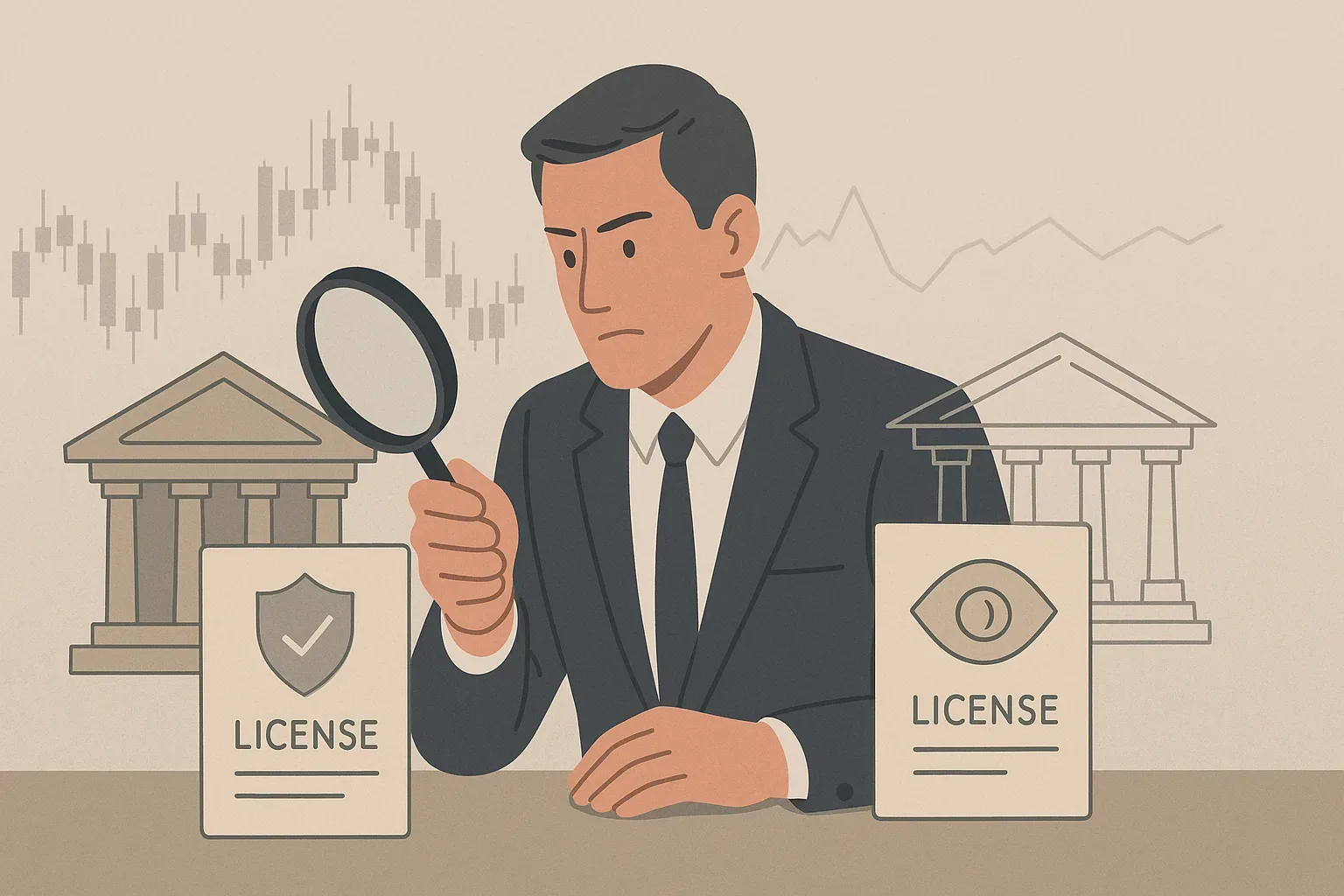
The process begins by locating the regulatory information prominently displayed on the broker's official website, typically in the footer, on an "About Us" page, or within their legal documentation. This information should clearly state the name of the regulatory body, the jurisdiction, and most importantly, the broker's license or registration number. For example, if a broker claims to be regulated by the FCA, visit the FCA's official register (Financial Services Register) and search using the provided license number or the broker's legal entity name. Verify that the entity name on the regulator's website matches exactly, and check the status of the license; ensure it is active, not expired, revoked, or subject to warnings. Pay attention to the registered address and contact details to confirm they align with the broker's information. Some regulators also list any past disciplinary actions or sanctions against the broker, which can provide further insights into their operational history. Relying solely on a broker's claims or logos is insufficient; direct verification via the regulator's official website is the only reliable method. This due diligence can prevent significant financial losses and help ensure you are trading in a secure environment. For further guidance on evaluating brokers, including reading broker reviews, explore https://forex-illusion.com/blog/broker-reviews.
Navigating International Regulations: What Global Traders Need to Know
Licensing standards and investor protections can vary significantly from one jurisdiction to another, directly impacting a trader's rights and available recourse. For instance, traders residing in the European Union are generally protected by ESMA (European Securities and Markets Authority) guidelines, which impose leverage restrictions and require negative balance protection. Similarly, US citizens must trade with brokers regulated by the NFA and CFTC, which have specific and stringent rules for domestic traders. The implication for global traders is that while a broker might hold multiple licenses, the specific license relevant to your country of residence will determine the level of protection and the trading conditions applicable to your account. It is therefore vital for global traders to understand not only which regulators oversee a broker, but also which specific license applies to their account based on their geographic location. This ensures that the chosen broker adheres to the protective frameworks relevant to their legal standing. A deeper understanding of these market dynamics is available through comprehensive forex education resources at https://forex-illusion.com/blog/forex-education.
Conclusion: Making Informed Decisions in the Regulated Forex Landscape
The journey through the forex market is fraught with inherent risks, but the choice of a regulated broker should not add unnecessary peril. By distinguishing between robust Tier-1 regulatory frameworks and the often-illusory oversight of offshore licenses, traders empower themselves to make informed decisions that prioritize the safety of their capital and the integrity of their trading experience. From verifying capital adequacy and compliance to scrutinizing transparency and dispute resolution mechanisms, every aspect of a broker's regulatory standing merits thorough investigation. In a market where illusions of security can be pervasive, a clear-eyed commitment to due diligence, cross-referencing licenses with official regulatory databases, is the trader's most potent defense. Ultimately, true security in forex trading is not found in marketing rhetoric or unsustainable promises, but in the unwavering commitment of a broker to stringent regulatory compliance and transparent operations, allowing traders to focus on strategy rather than the solvency or legitimacy of their trading partner.
What are the fundamental forex broker licensing requirements globally?
Globally, fundamental forex broker licensing requirements typically include significant capital adequacy, mandating brokers to hold substantial financial reserves to ensure solvency and protect client funds. Strict client fund segregation is also universal, requiring client money to be held in separate bank accounts distinct from the broker's operational capital. Compliance with Anti-Money Laundering (AML) and Know Your Customer (KYC) regulations is essential for preventing financial crime and verifying client identities. Brokers must also demonstrate robust internal controls, risk management systems, and transparent reporting of their financials to regulatory bodies. Many regulators also mandate participation in investor compensation schemes and offer established dispute resolution procedures to protect client interests.
Which major regulatory authorities are responsible for overseeing forex brokers, and what standards do they enforce?
Major regulatory authorities responsible for overseeing forex brokers include the Financial Conduct Authority (FCA) in the UK, the Australian Securities and Investments Commission (ASIC), the Cyprus Securities and Exchange Commission (CySEC) in the EU, and the Commodity Futures Trading Commission (CFTC) alongside the National Futures Association (NFA) in the US. The Swiss Financial Market Supervisory Authority (FINMA) and Germany's Federal Financial Supervisory Authority (BaFin) are also key players. These authorities enforce high standards such as substantial capital requirements, strict rules on client money segregation, mandating transparent financial reporting and audits, and ensuring brokers provide fair execution and clear disclosure of risks. They also implement measures like leverage restrictions, negative balance protection, and robust complaint handling procedures to safeguard retail traders.
How do different regulatory tiers (e.g., Tier-1 vs. offshore) impact trader protection and a broker's operational scope?
Different regulatory tiers significantly impact trader protection and a broker's operational scope. Tier-1 regulators (e.g., FCA, ASIC) offer the highest level of trader protection through stringent capital requirements, mandatory client fund segregation, investor compensation schemes, and strict enforcement of fair practices. This often translates to lower available leverage for retail traders and more comprehensive product disclosure. Conversely, offshore regulators (e.g., those in Vanuatu, St. Vincent and the Grenadines) typically have laxer requirements, minimal capital mandates, and often no investor compensation funds. While this allows brokers more operational freedom, such as offering very high leverage and fewer restrictions, it leaves traders with significantly reduced protection and little recourse in cases of dispute or broker insolvency. The choice of tier directly influences the safety of a trader's capital and the legal and financial safeguards available to them.
What are the critical risks associated with trading through an unlicensed or weakly regulated forex broker?
Trading through an unlicensed or weakly regulated forex broker carries critical risks that can lead to substantial financial losses. These risks include the potential for outright fraud, where the broker might disappear with client funds or manipulate trading conditions against the trader. There is a high risk of losing deposited capital with no legal recourse, as these entities operate outside recognized regulatory frameworks. Traders may also face difficulties or outright refusal when attempting to withdraw funds. Other perils involve a lack of transparency regarding fees and trading conditions, potential for market manipulation, identity theft due to lax data security, and the absence of critical protections like negative balance protection, which could leave traders owing more than their initial deposit. For comprehensive information on choosing reliable brokers and mitigating risks, refer to our resources on forex trading brokers at https://forex-illusion.com/blog/forex-trading-brokers.
How can traders effectively verify a forex broker's license and regulatory status?
First, locate the broker's regulatory information on their official website, typically in the footer or a dedicated "About Us" or "Legal" section. This should include the name of the regulatory authority and a specific license or registration number. Second, visit the official website of the stated regulatory body (e.g., FCA, ASIC, CySEC). Use the regulator's public register or search tool to look up the broker by its official legal entity name or license number. Crucially, confirm that the details on the regulator's site exactly match those provided by the broker and that the license is active and in good standing, not expired, revoked, or subject to any warnings. This direct verification process is the most reliable way to confirm a broker's legitimacy.
What implications do varied international licensing standards have for global traders seeking reliable brokers?
Varied international licensing standards have significant implications for global traders seeking reliable brokers, primarily affecting the level of investor protection, available trading conditions, and legal recourse. Traders might encounter a complex landscape where a broker holds licenses in multiple jurisdictions, each with different rules governing leverage, negative balance protection, and dispute resolution. This can lead to situations where traders from different countries, even if trading with the same overarching company, operate under different terms depending on which entity of the broker is licensed to serve their region. Global traders must understand which specific license and jurisdiction apply to their account based on their residency to ensure they are adequately protected. This often requires careful consideration of the trade-off between potentially higher leverage offered by less regulated offshore entities and the superior safety nets provided by Tier-1 regulated brokers. Ultimately, an informed choice ensures that the broker's regulatory environment aligns with the trader's risk tolerance and legal expectations.
Sources and verification
No verified sources have been attached to this archived record yet. External links inside the body were preserved from the original publication for audit purposes and are not endorsements. Verification status: Unreviewed.