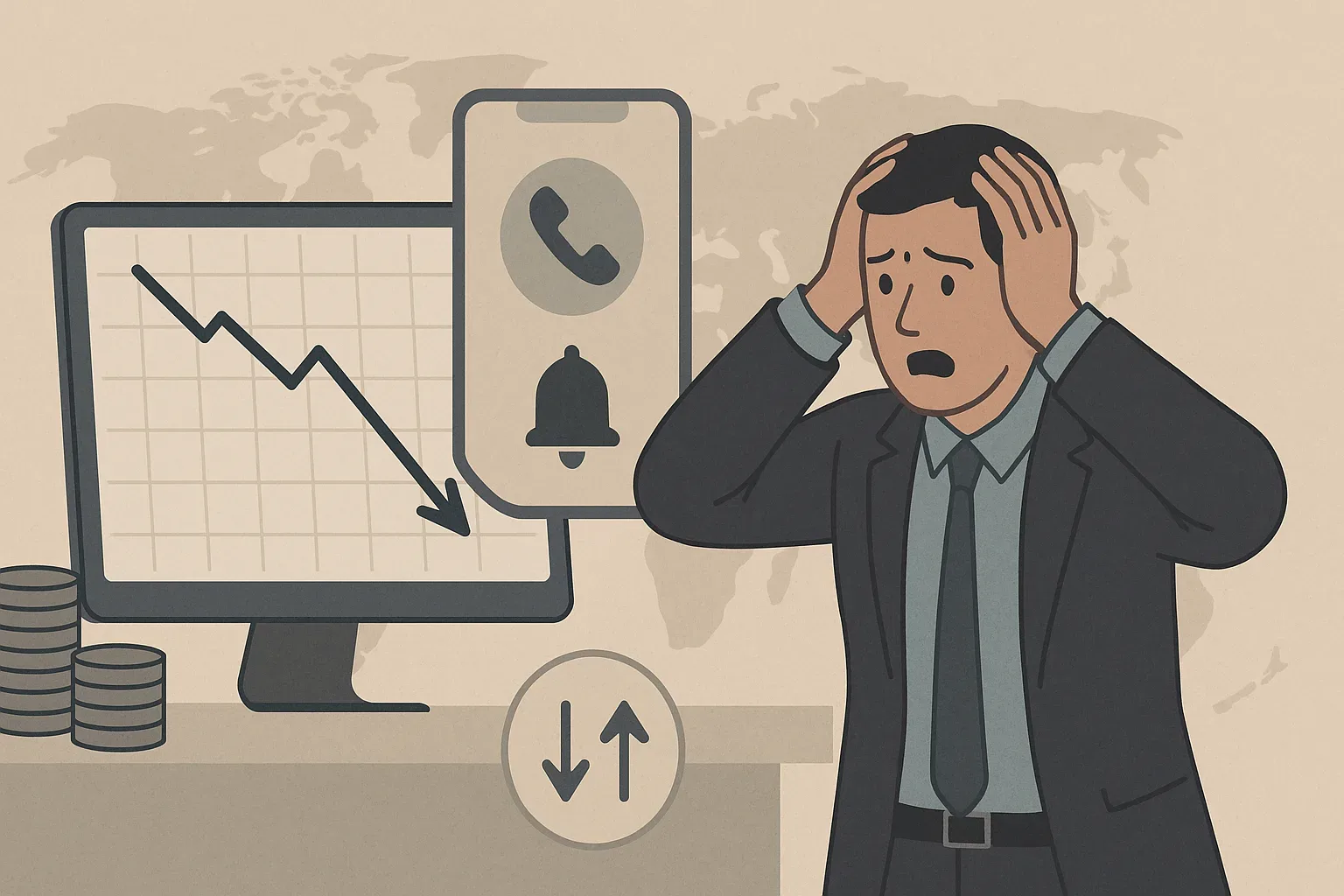
This article will demystify the critical concept of a margin call in forex, breaking down its exact mechanics, real-world consequences, and practical, actionable strategies for prevention and response, to expose it not as a mystery but a predictable risk management signal.
What is a Margin Call in Forex Trading?
A margin call in forex trading is a formal notification from your broker that the equity in your trading account has fallen below the required maintenance margin level. This event occurs when your floating losses reduce your available margin to a point where it can no longer support your open positions. Think of it as a warning light on your car's dashboard: it tells you there's a problem that needs attention, in this case, a deficit in the capital backing your trades. The primary reason it occurs is adverse market movement against your open positions, coupled with the inherent leverage in forex trading magnifying these movements. A margin call is essentially your broker asking for more funds to cover potential losses or to reduce your exposure.
Understanding the Core Components: Margin, Equity, and Leverage
Margin is the portion of your capital that your broker essentially "reserves" to keep a leveraged trade open. It's not a cost or a fee, but rather a good faith deposit ensuring you can cover potential losses. There are two main types: initial margin, required to open a position, and maintenance margin, which is the minimum equity required to keep it open. It's calculated as your cash balance plus or minus the floating profit or loss of all your open positions. As your trades move into profit or loss, your equity fluctuates. Leverage is the mechanism that allows you to control a large position with a relatively small amount of capital. For example, 1:100 leverage means you can control a $100,000 position with just $1,000 of your own money. While leverage amplifies potential gains, it also dramatically magnifies losses. For a deeper understanding of this double-edged sword, refer to our article on how leverage enlarges a forex loss. A margin call occurs when your equity falls to or below the maintenance margin level, indicating that your leveraged positions are drawing too heavily on your actual capital.
How a Margin Call is Triggered: The Calculation and Broker Action Explained
A margin call is triggered when your account's margin level falls to a specific percentage, predetermined by your forex broker. The margin level is calculated as (Equity / Used Margin) * 100%. Used margin is the total amount of margin currently tied up in your open positions. Let's say your broker's margin call level is 100%. This means if your Equity drops to be equal to your Used Margin, a margin call will be triggered. If it’s 50%, a margin call triggers when your Equity falls to half of your Used Margin. As losses mount on your open trades, your Equity decreases. Simultaneously, your Used Margin remains constant for those positions, unless you close them. When this ratio hits the broker's threshold, an automatic alert is sent to you, the trader. Brokers often have specific policies regarding this. Some will simply notify you, urging you to deposit more funds or close positions. This process is fully automated by the broker's trading platform to protect both the trader from accumulating excessive debt and the broker from unrecoverable losses.
The Real-World Consequences of a Forex Margin Call
The immediate consequences of a forex margin call are both financial and psychological. Financially, the most pressing issue is the potential for forced liquidation, or a "stop-out," where your broker automatically closes some or all of your open positions to bring your account back above the maintenance margin level. This often happens at the worst possible time, locking in significant losses that might otherwise have recovered. Such forced closures mean you lose control over your trades and your strategy. The long term consequences can include substantial capital depletion, making it harder to rebuild your account. Traders might feel compelled to take on even higher risks in an attempt to quickly recover losses, a dangerous cycle that often leads to further losses. It can also damage a trader's discipline, leading to impulsive decisions rather than adherence to a well-defined trading plan.
Margin Call vs. Stop Out: A Critical Distinction
A margin call is primarily a warning. It's a notification from your broker that your account equity has dropped to a level where it's approaching the minimum required to maintain your open positions. You still have some time, albeit limited, to react. A stop-out, however, is the actual execution of the broker's policy when the margin call warning goes unheeded or when market movements are so rapid that the margin call threshold is immediately breached. When a stop-out level is reached (which is usually a lower margin level percentage than the margin call level, e.g., 30% margin level for stop-out versus 100% for margin call), your broker's system will automatically and systematically close your open positions, starting with the largest losing ones, until your account's margin level recovers above the stop-out threshold. The key difference is that a margin call is a pre-emptive alert, offering a chance for intervention, while a stop-out is the final, automatic protective measure taken by the broker, resulting in forced liquidation.
Effective Strategies to Avoid a Forex Margin Call
While high leverage offers the potential for greater profits, it equally amplifies losses, making margin calls more likely. Use leverage conservatively, aligning it with your risk tolerance and account size. Never risk more than a small percentage (e.g., 1-2%) of your total trading capital on any single trade. This ensures that even if a trade goes significantly against you, the impact on your overall equity is limited. A stop-loss order automatically closes your position when it reaches a predetermined loss level, limiting your downside exposure and preventing small losses from escalating into margin-call-triggering events. Regularly check your trading platform's display of your free margin and margin level to stay aware of your account's health. Do not wait for your broker to send a notification; be proactive. Emotional decision-making, such as opening too many positions or trying to recoup losses quickly, often leads to excessive risk-taking and can rapidly deplete your equity.
What to Do When You Receive a Margin Call
Identify which trades are contributing most significantly to your floating losses. This increases your account equity, thereby raising your margin level above the critical threshold and giving your positions more breathing room. Ensure you have sufficient capital readily available for such eventualities. Prioritize closing the trades that have the poorest outlook or are consuming the most margin. This frees up used margin and increases your margin level. A margin call is a clear signal that something went wrong. Analyze what led to the situation: Was it over-leveraging? Poor position sizing? Failure to use stop-losses? Misinterpretation of market direction? Use this experience as a learning opportunity to refine your approach and prevent future occurrences. Do not rush back into trading without a clear, revised plan.
Sources and verification
No verified sources have been attached to this archived record yet. External links inside the body were preserved from the original publication for audit purposes and are not endorsements. Verification status: Unreviewed.